
Last updated November 21, 2026
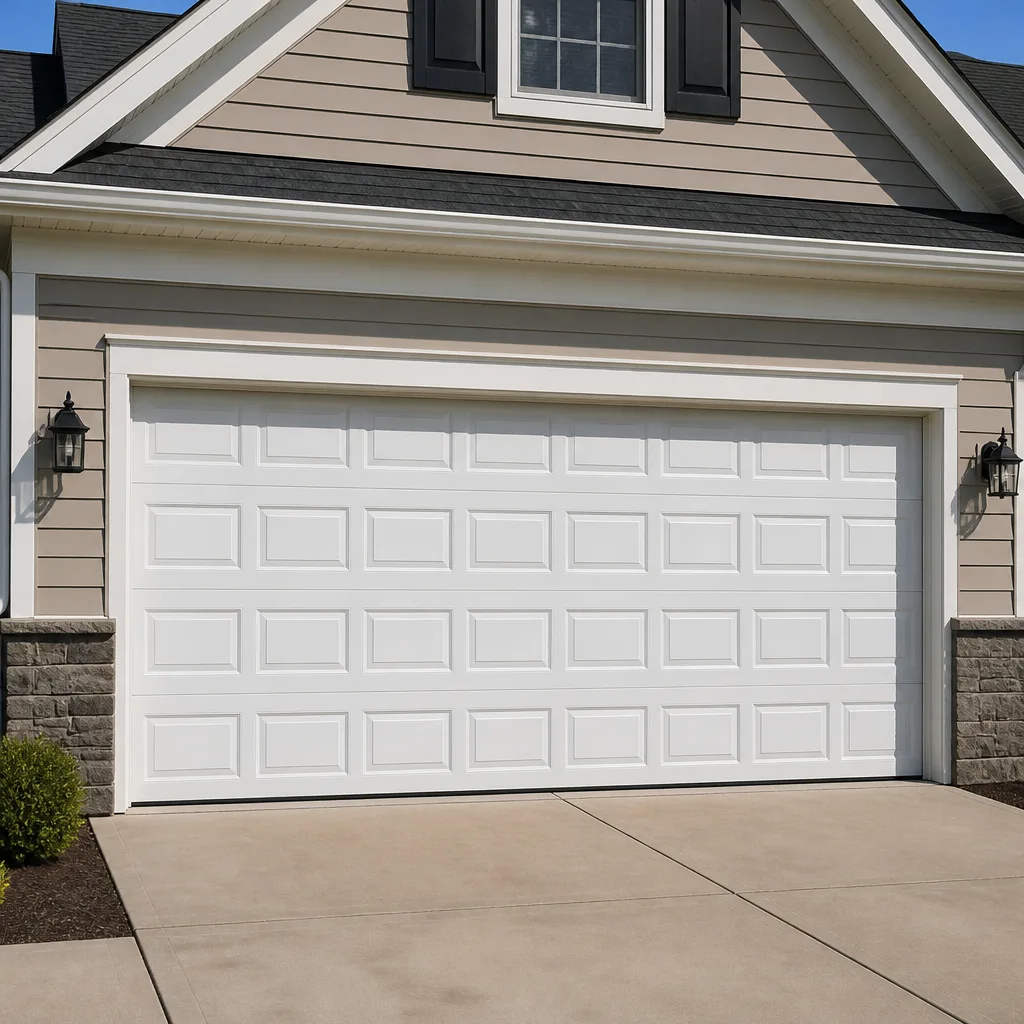 Raised-panel steel
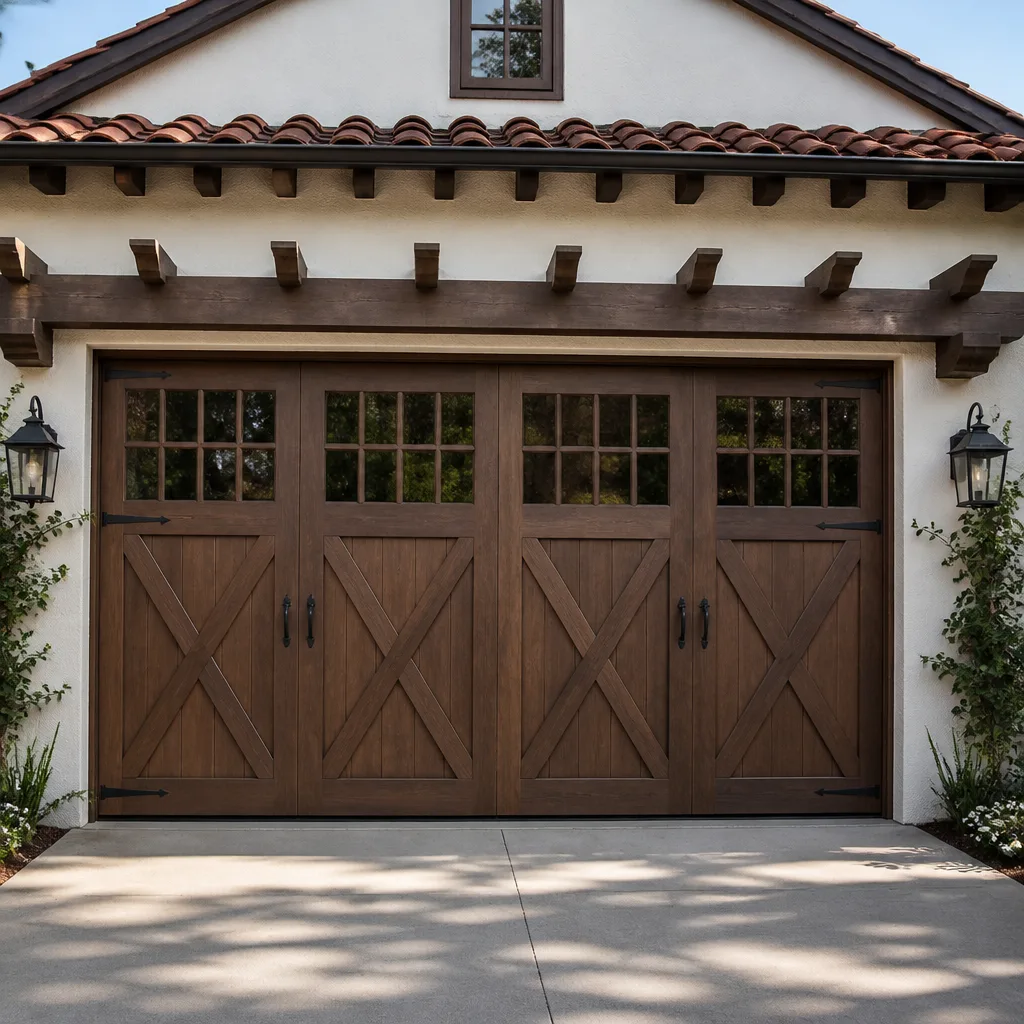 Carriage house
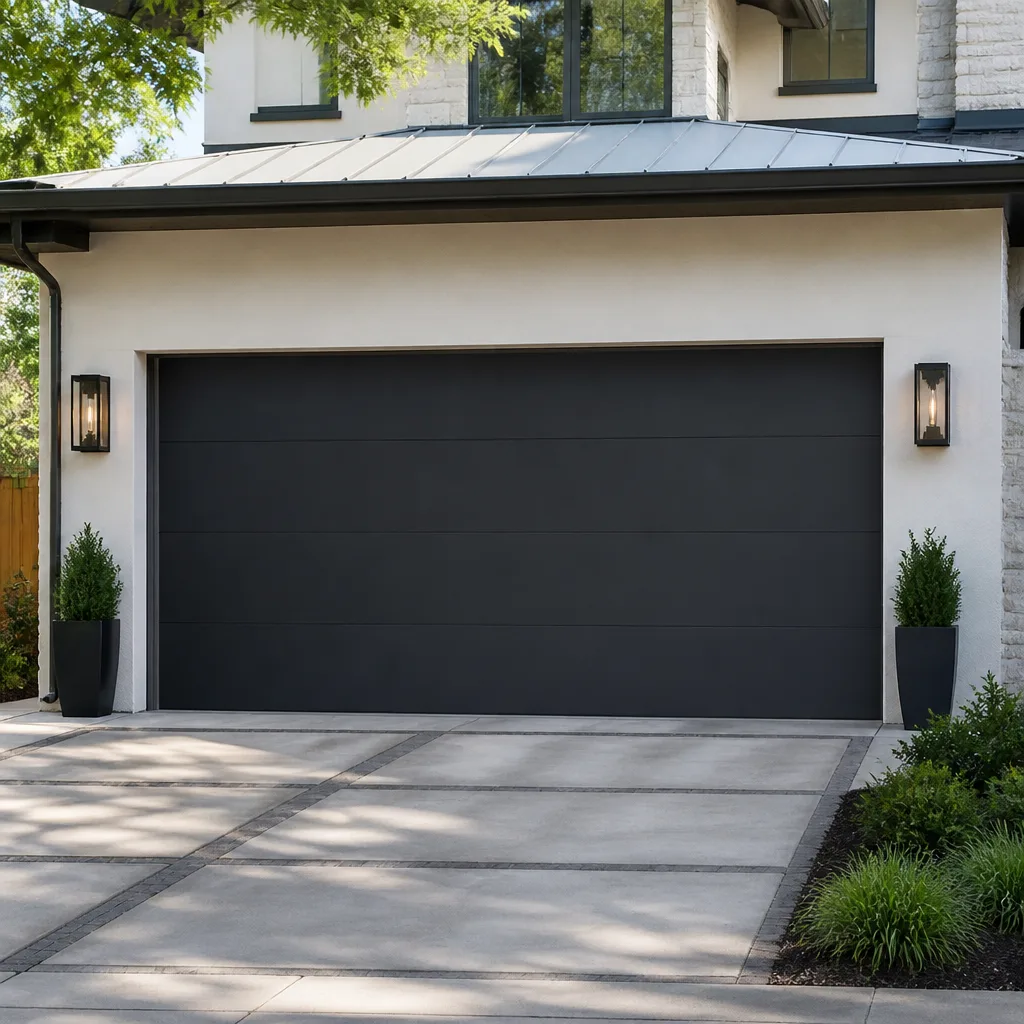 Modern flush
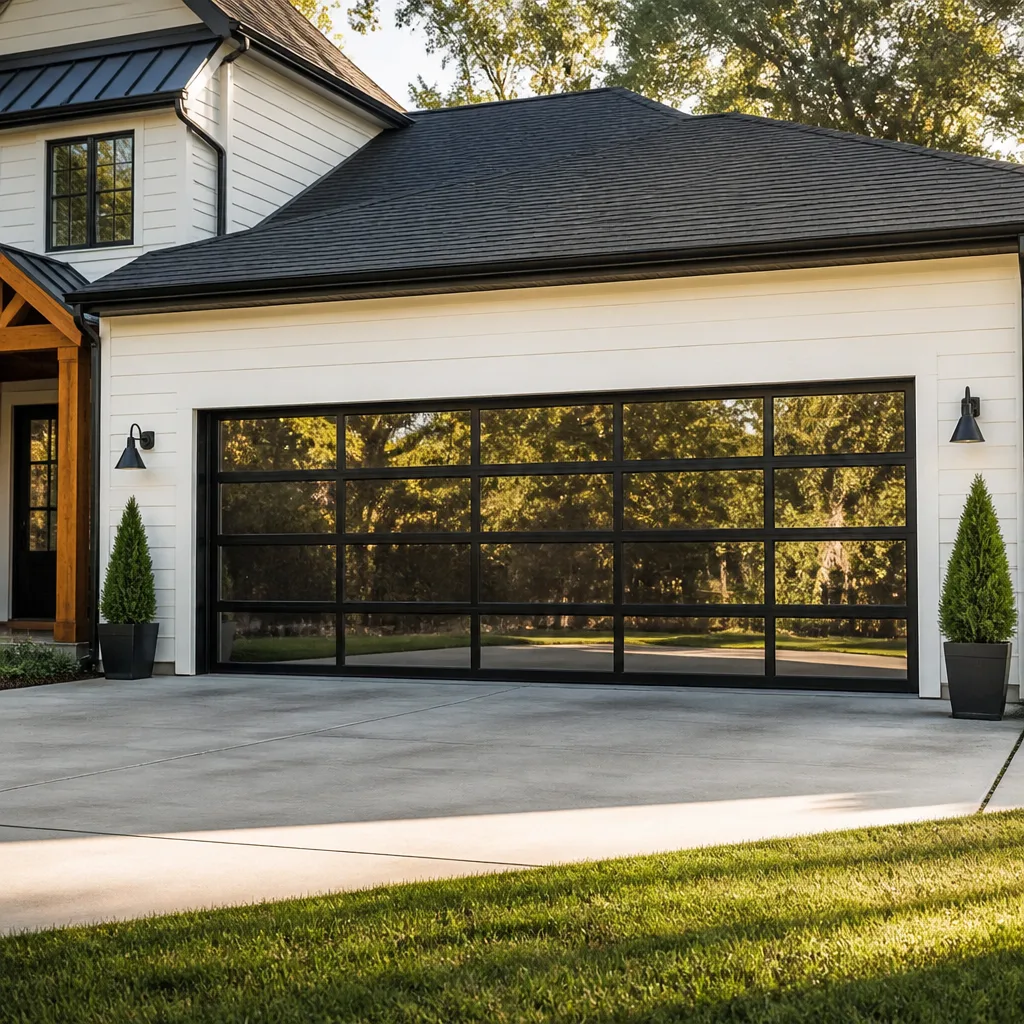 Full-view glass
 LiftMaster openers
 Chamberlain openers
Full 25-point door and opener safety check with every visit - springs, cables, rollers, tracks, and your LiftMaster or Chamberlain opener included
You get a price before we start. It does not change when the pro arrives.
Get your free estimateGarage Door Emergency Preparedness Guide for Providence Homes
Most people assume a garage door emergency means a snapped spring. In our experience across Providence, the harder problem is quieter: a homeowner standing in a dark garage, pulling a release cord that won’t budge, unable to get the car out. The door itself is fine. The release is stuck, and nobody tested it before the night they needed it. That’s the gap this guide closes. You’ll learn the three kinds of garage door emergencies, what to do in the first ten minutes of each, how to secure a door that won’t close against a Providence storm, and the exact information to have ready before you call for help.
Quick Answer
Garage door emergencies in Providence fall into three categories: power outages that leave you locked out or trapped, mechanical failures like snapped cables and broken springs, and physical damage from winter storms and ice. Each needs a different response. Never force a damaged door, never stand under one with a broken spring, and always test your manual release before you need it. For anything involving springs, cables, or a door that won’t stay up, call a trained technician rather than attempting a fix.
Styles & brands we work with
- Raised-panel steel
- Carriage house
- Modern flush
- Full-view glass
- LiftMaster openers
- Chamberlain openers
Table of Contents
- The Three Kinds of Garage Door Emergencies
- The Manual Release Cord: How It Works and How to Test It
- The First 10 Minutes of a Cable Snap or Spring Failure
- How to Secure a Garage Door That Won’t Close
- The Emergency Contact Protocol: What to Have Ready Before You Call
- Preventing the Top Three Providence Winter Emergencies
- Common Mistakes to Avoid
- When to Call a Professional
The Three Kinds of Garage Door Emergencies
Not every garage emergency is the same, and treating them the same is where homeowners get into trouble. In Providence, we see three distinct scenarios, and each one calls for a genuinely different first move.
Power outage. The opener has no power, the door is down, and your car is inside. This is the most common and least dangerous situation, but it traps people at the worst times. The fix lives in the manual release, which we cover in detail below. The key point: this is a prepare-ahead problem, not a solve-it-in-the-dark problem.
Mechanical failure. A torsion spring snaps, a cable lets go, or the opener strips a gear. This is the category that carries real injury risk. A garage door under spring tension stores enormous force, and a door that has lost its counterbalance can come down hard and fast. A snapped spring also means the door is suddenly far heavier than the opener was ever designed to lift.
Physical damage from weather. Providence winters bring ice, snow load, and freeze-thaw cycles that stress the whole system. A bottom seal frozen to the slab can lock the door down. Ice accumulated on the door panels adds weight the springs weren’t balanced for. Wind can rack a door out of its tracks. These are slower-building emergencies, but they arrive all at once when the temperature drops.
Knowing which category you’re in tells you whether to reach for the release cord, back away from the door, or grab a shovel. It also tells you what to say when you call for help, and that saves time when time matters.
The Manual Release Cord: How It Works and How to Test It
The manual release cord is a pull handle hanging from the trolley that connects your opener to the door. Pulling it disengages the opener from the door so you can lift the door by hand. It’s the single most important emergency feature on your garage door, and it’s the one most homeowners have never touched until the night the power goes out. Here’s how it actually works and the two ways people use it wrong.
How it works
The trolley rides on the opener’s rail and holds the door’s arm. The release cord trips a lever that frees the trolley so the door moves independently of the opener. When you pull it, the opener no longer controls the door. The door becomes a manual door: you lift it with your hands, and the springs do most of the work if they’re in good condition.
The two ways homeowners use it wrong
- Pulling it under load, with the door partially open. If the door is halfway up when you pull the release, the door can drop or slam because the opener was holding it in place. Always pull the release with the door fully closed, then lift by hand.
- Pulling it while the door is under tension and then trying to re-engage it manually. Reconnecting the trolley to the opener is a different move than releasing it. People yank the cord, can’t get the car out, and then can’t get the opener to grab the door again. The re-engage move is a deliberate push of the trolley, not another pull of the cord.
How to test it before an emergency without breaking anything
Do this test while the door is fully closed and the opener is powered. Pull the release cord firmly. You should hear and feel the trolley disengage. Lift the door a few inches by hand to confirm it moves freely, then lower it back down. To reconnect, run the opener so the trolley travels toward the door and the arm re-engages. If the cord won’t pull, feels slack, or the door won’t lift by hand after releasing, that’s a maintenance issue worth resolving before winter, not in the middle of a Providence ice storm.
If your opener is a LiftMaster or Chamberlain with MyQ, or a Genie with Aladdin Connect, the app can tell you whether the door is open or closed, but it can’t release a stuck trolley. The cord is still the physical backup. Test it.
The First 10 Minutes of a Cable Snap or Spring Failure
When a cable snaps or a spring breaks, the sound is unmistakable: a loud bang, then a door that’s suddenly heavy or crooked. What you do in the next ten minutes determines whether this is an inconvenience or an injury. Follow this sequence.
- Stop. Don’t touch the door or the opener. A door with a broken spring or cable is no longer counterbalanced. The opener will strain and may damage the door further, and the door can slam.
- Keep people and pets clear of the door area. The door may be hanging unevenly or may drop without warning. Move cars out of the door’s path if it’s safe to do so without walking under it.
- Do not attempt to lift the door by hand. With the counterbalance gone, a double-car door can weigh well over what a person can safely control, and it can come down on you.
- Do not try to cut, untangle, or reattach the cable. A snapped cable can whip with stored energy. Cables and springs are the two components homeowners should never handle without training and proper tools.
- Look, don’t touch. Note whether the door is crooked in the tracks, whether the cable is dangling, and whether the spring is visibly broken (a clean gap in the coil). This is the information your technician needs.
- Secure the space, then call. If the door is open and won’t come down, see the section below on securing a door. Then call for a trained technician.
What not to do is just as important as what to do. Don’t spray lubricant on a broken spring thinking it will help. Don’t force the opener to cycle again to “see if it works.” Don’t try to prop the door with a board and call it fixed. Spring and cable work is the one part of garage door service that genuinely belongs to a specialist, which is why garage door repair that includes spring and cable work should always be handled by someone who does it every day.
For the door itself, whether it’s a Clopay, Amarr, or Wayne Dalton model, the repair approach is similar: isolate the failure, restore the counterbalance, and re-tension safely. Our technicians have up to 13 years of experience and are trained on these brands and others, which means faster diagnosis and the right part on the first visit.
How to Secure a Garage Door That Won’t Close
A garage door that won’t close is a security problem, especially if the garage connects to the house. A Providence storm rolling in while your door hangs open is a different scenario from a break-in attempt, but the goal is the same: close the gap with what’s already in the garage, and don’t force the door. Forcing a door that’s off its track or hung up on ice will bend panels and turn a small fix into a full panel replacement.
Here’s what to do, using only items typically already in a garage:
- Clear the obstruction first. Nine times out of ten, a door that won’t close has something in the safety sensor beam. Check the two small sensors near the floor on each side of the door. If the indicator light is off or blinking, wipe the lenses and clear anything in the path. This is the single most common cause.
- Break the ice seal. If the bottom seal is frozen to the slab, don’t force the door. Use a plastic shovel or a stiff broom to break the bond along the bottom edge, then try again.
- Block the opening if it won’t close. If the door is stuck open and won’t come down, back a car up close to the opening as a physical barrier, or place a heavy object like a trash bin in the doorway. This is a stopgap, not a fix.
- Disconnect the opener and lower by hand if it’s safe. Only if the springs are intact and the door moves freely. If the door feels heavy or binds, stop; that’s a mechanical issue, not a closing issue.
- Don’t use tape, rope, or zip ties to hold a door closed. These fail under wind load and can let the door crash down.
If the door is off its tracks or the opener is failing, securing it is a temporary measure while you arrange a repair. An opener that won’t respond is often a logic board or safety-sensor issue, and garage door opener repair is the right call rather than a workaround.
The Emergency Contact Protocol: What to Have Ready Before You Call
When your garage door fails, the last thing you want is to be fumbling for information while a door hangs open. Have the following ready, either in your phone or written down near the garage:
- Your opener brand and model (LiftMaster, Chamberlain, Genie, and Craftsman are common in Providence homes).
- Your door brand and approximate size (single or double car).
- Whether the door is open, closed, or stuck partway.
- Whether you see a broken cable, a broken spring, or neither.
- Whether the door is off its tracks.
- Your address and a callback number.
Then, when you call, ask these questions to confirm you’re talking to a legitimate local company and not a national call center that will subcontract the work:
- “Where are you located?” A real local company can tell you. A call center routes you to whoever is closest.
- “Do you send your own technicians, or a subcontractor?” You want the company doing the work, not brokering it.
- “Can you tell me what a spring repair typically involves?” A knowledgeable person can explain the process. A dispatcher reading a script can’t.
- “Are you licensed and insured as Rhode Island requires?” The company should be able to confirm its own status.
- “What’s the estimated cost range before you come out?” You want a range and a written estimate before work starts, not a surprise invoice.
Providence Garage Door Repair Co is the multi-brand specialist that handles spring repair, opener repair, installation, and emergency service. We answer 24/7. Fast dispatch from 7am to 7pm, Sunday through Friday. When you call, you’re reaching a garage door specialist, not a generalist call center.
Preventing the Top Three Providence Winter Emergencies
Providence winters are the stress test for a garage door. Freeze-thaw cycles, ice, and snow load push the system harder than any other season. These three emergencies account for most of our winter calls, and all three are preventable with a little preparation before the first hard freeze.
1. Frozen bottom seals locking the door down
When the bottom rubber seal meets a wet slab and the temperature drops, the two freeze together. The opener strains, the door won’t lift, and homeowners assume the opener is broken. Prevention: before winter, clean the bottom seal and the concrete beneath it, and check the seal for cracks or hardening. A worn seal is more likely to freeze and should be replaced. During a freeze, break the bond with a plastic shovel before running the opener. Never force it; you’ll strip the opener gear or tear the seal.
2. Ice-loaded door springs snapping under extra weight
Springs are balanced to the weight of the door. When snow and ice build up on the panels, that balance is thrown off, and the springs carry more load than they were tensioned for. Prevention: keep the door clear of snow and ice buildup, and have your springs inspected before winter. A spring that’s already near the end of its cycle is far more likely to snap under extra weight. If you hear a bang and the door won’t lift, that’s a spring failure: stop and call.
3. Power outage trapping cars inside
Winter storms knock out power, and a garage door with no manual release access is a locked box. Prevention is simple: test your manual release cord before winter, make sure it’s reachable and not tangled, and know how to re-engage the trolley afterward. If your opener has a battery backup (many modern LiftMaster and Chamberlain units do), confirm the battery is healthy. For homes with a Genie Aladdin Connect or MyQ system, the app can confirm door status during an outage, but the cord is still your physical release.
If your door is older or your opener is legacy equipment, a pre-winter inspection is worth the call. Full garage door installation is also an option if the door and opener are both past their service life, and it’s better to plan a replacement in fall than to face a failure in January.
Common Mistakes to Avoid
- Pulling the manual release with the door partially open. The door can drop or slam because the opener was holding it up. Always release with the door fully closed, then lift by hand.
- Forcing a frozen door with the opener. Running the opener against a frozen bottom seal strips gears and can damage the door. Break the ice bond first, then open.
- Trying to fix a snapped spring or cable yourself. These components store enormous energy. A snapped cable can whip, and a door with a broken spring can come down on you. This is the one job that belongs to a specialist.
- Ignoring a door that’s off its tracks. A door that’s jumped its tracks can fall. Don’t run the opener and don’t try to force it back; secure the area and call.
- Calling a number that turns out to be a national call center. Ask where they’re located and whether they send their own technicians before you book. A subcontracted repair can mean a second visit and a second bill.
- Skipping the pre-winter release test. The manual release is the one emergency feature you can’t test during the emergency. Test it in fall, before the ice.
- Assuming the opener is broken when the door won’t close. Check the safety sensors first. A dirty lens or an object in the beam is the most common cause, and it’s a two-minute fix.
See the difference
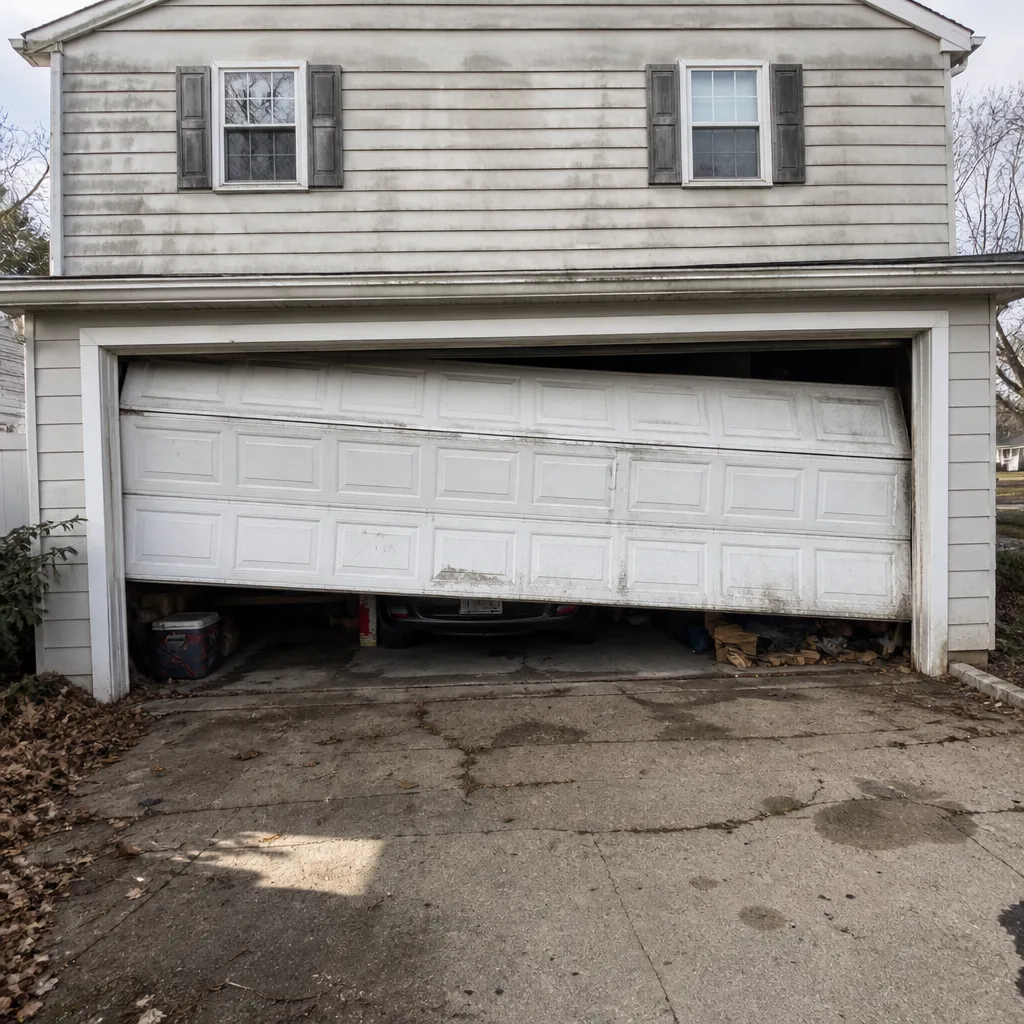 Before
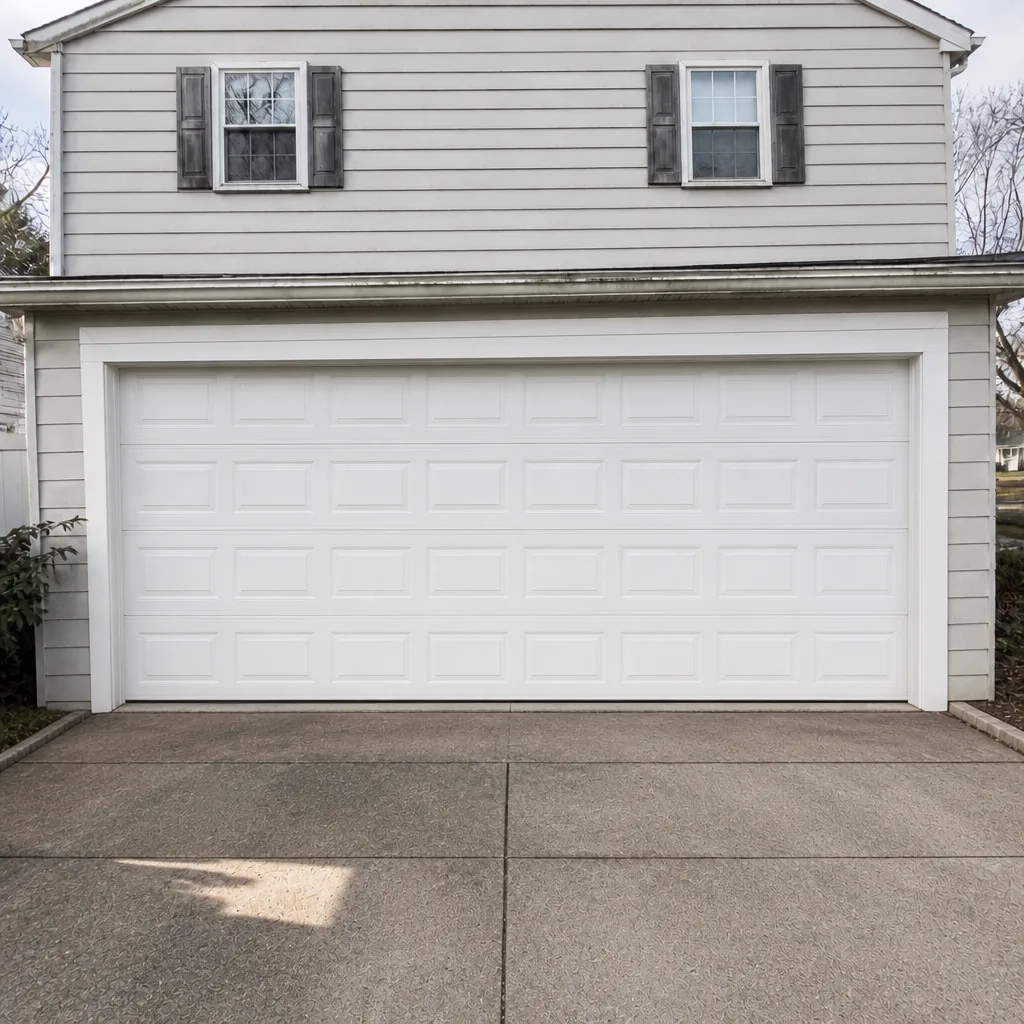 After
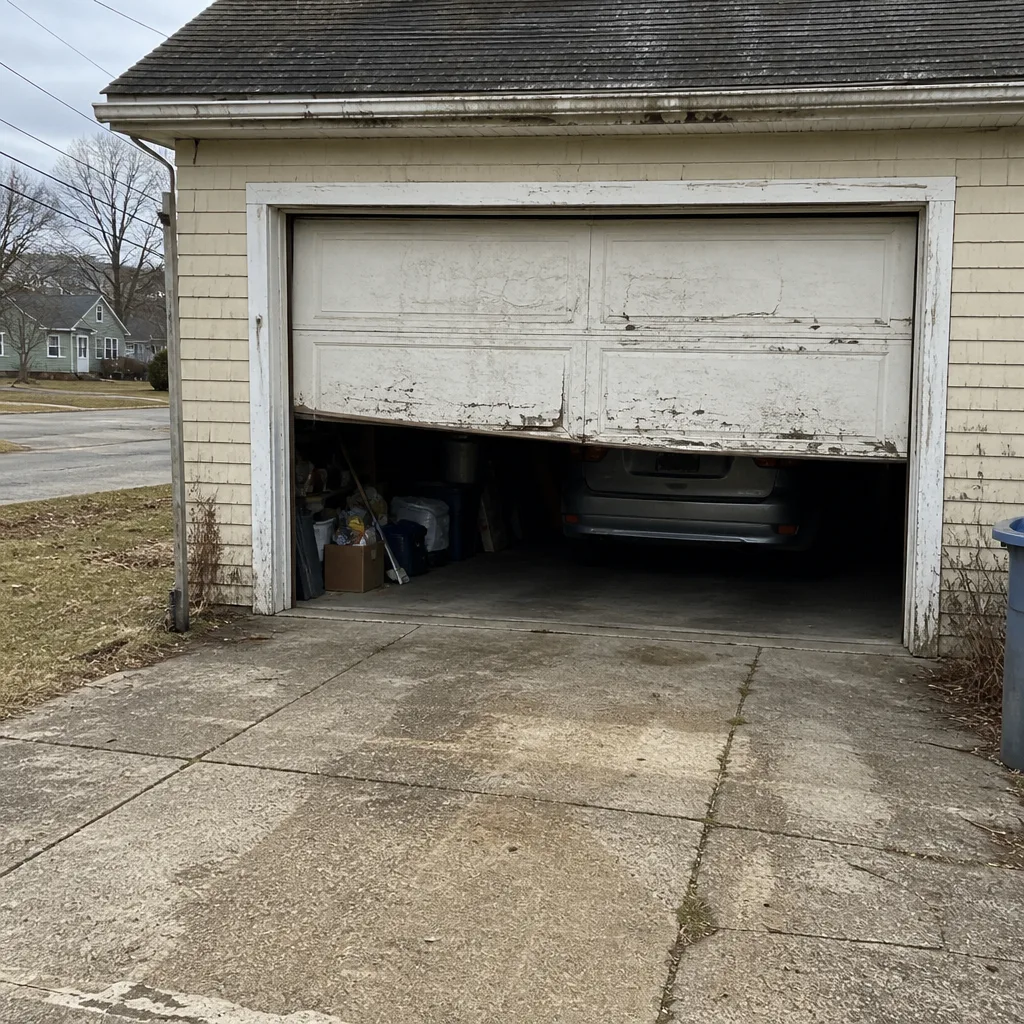 Before
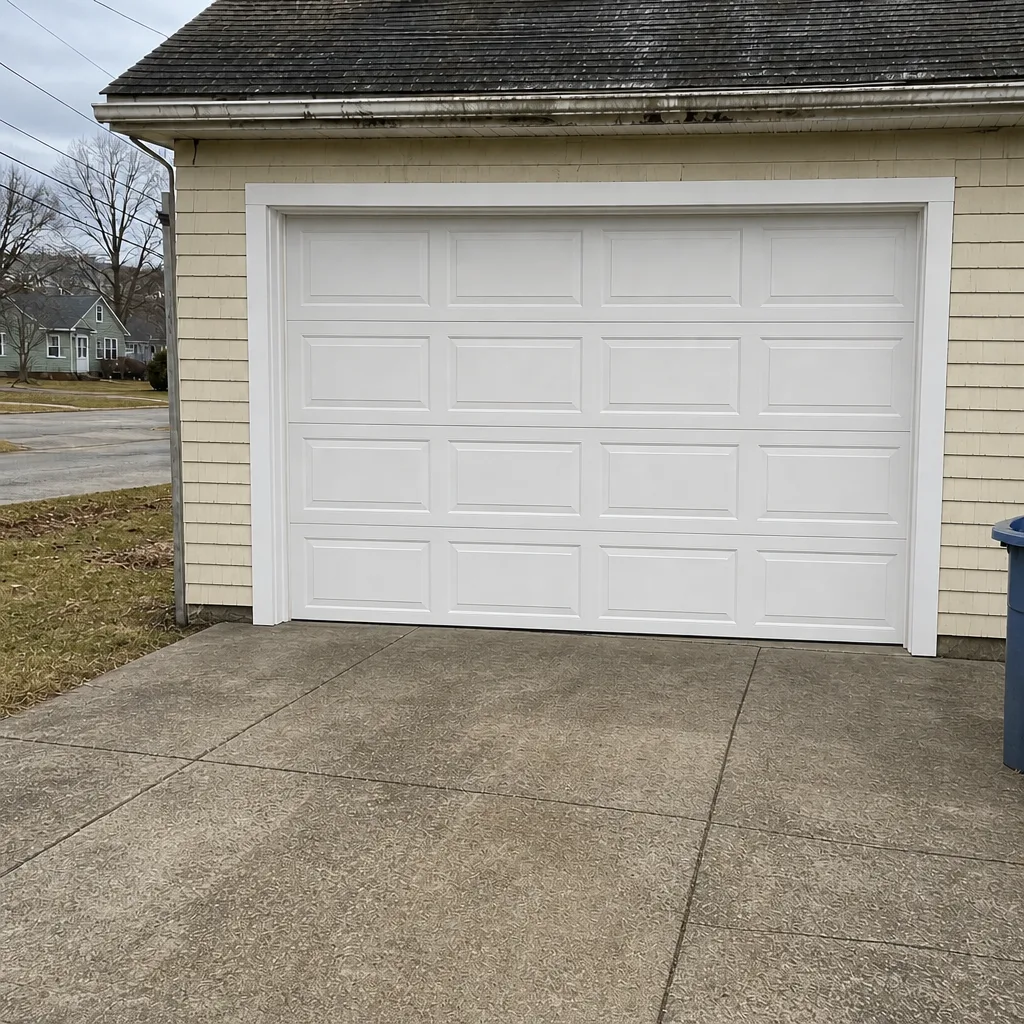 After
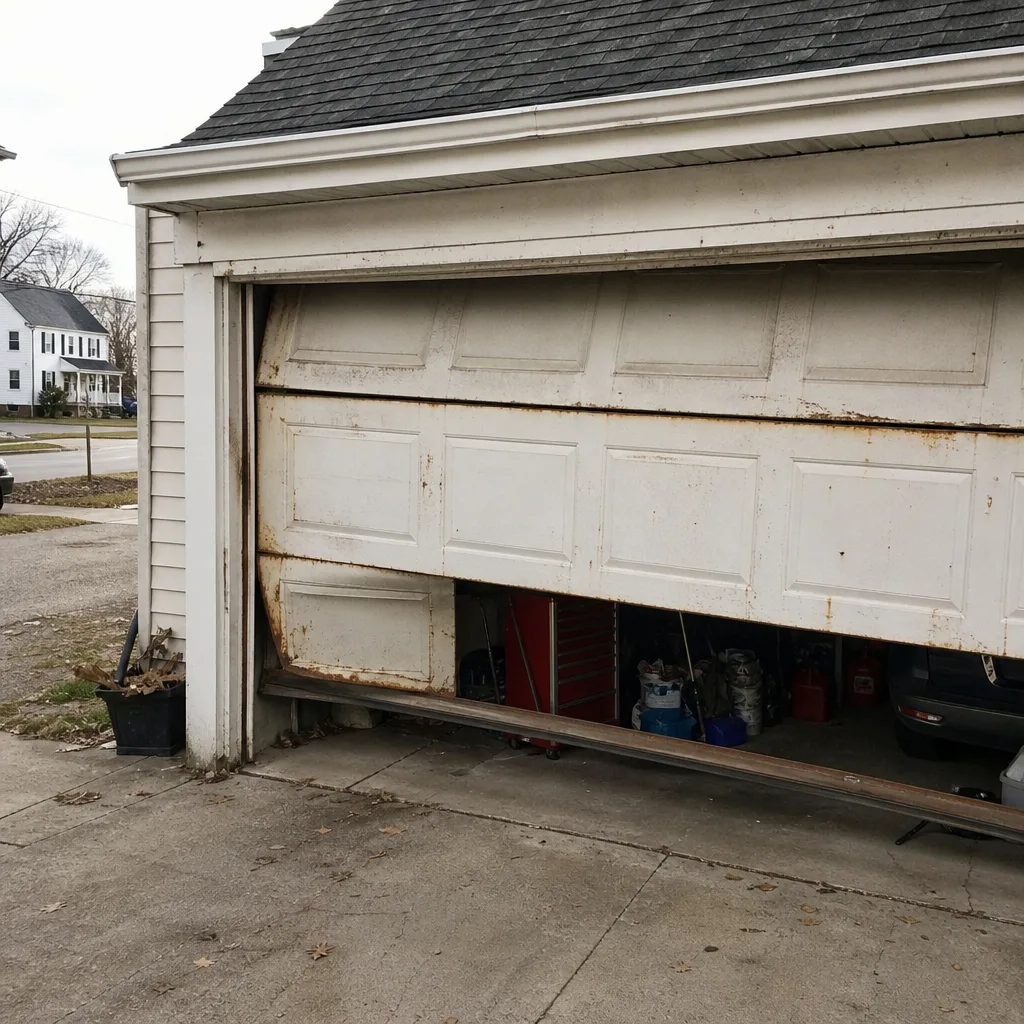 Before
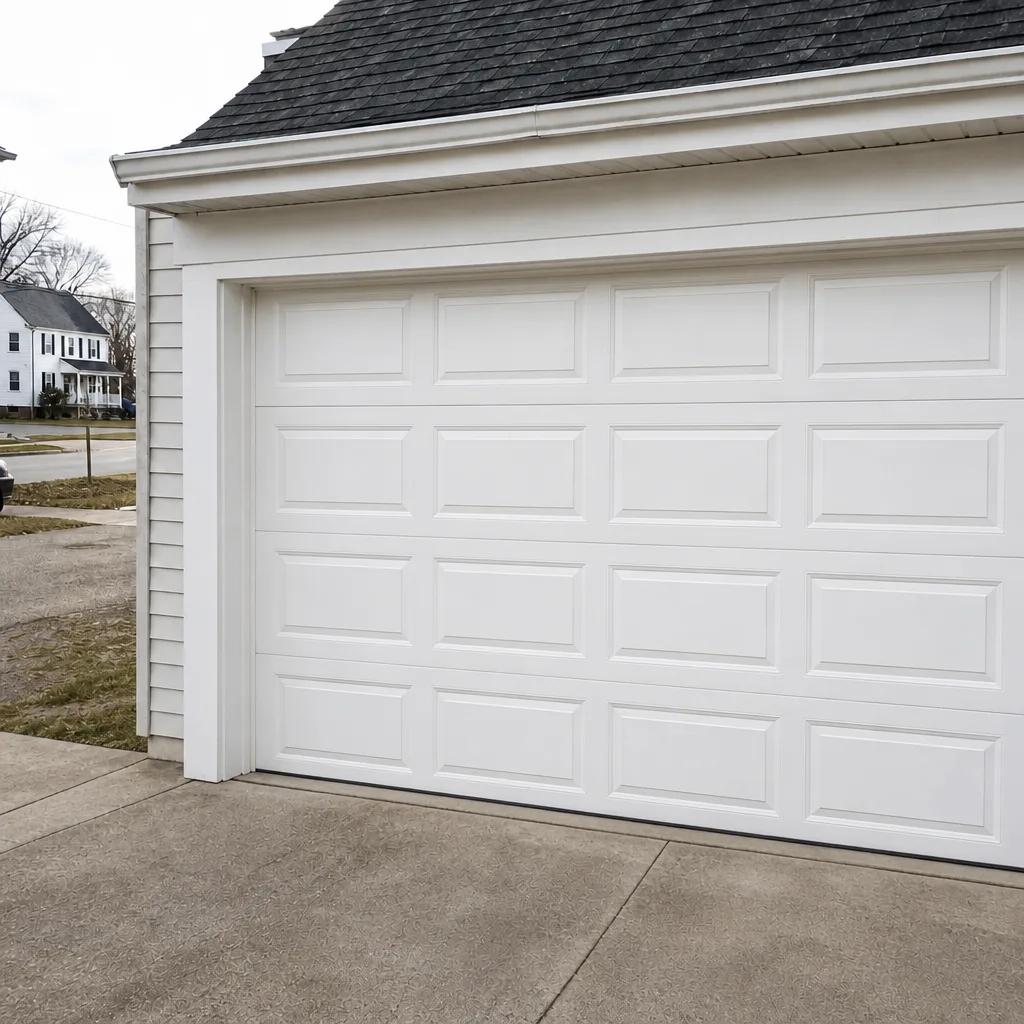 After
When to Call a Professional
Call a professional for anything involving springs, cables, or a door that’s off its tracks. Those are the situations where the stored energy in a garage door can hurt you, and no amount of caution makes DIY safe. Also call if the opener won’t respond after you’ve checked the sensors and the power, if the door is crooked or binds when you lift it by hand, or if the door won’t secure your home and you need it closed today. For a door that’s simply stuck open and you need it secured, that’s an emergency too. Providence Garage Door Repair Co offers free estimates in Providence. Call (844) 954-3433. We answer 24/7. Fast dispatch from 7am to 7pm, Sunday through Friday.
Frequently Asked Questions
Stop and keep everyone clear of the door. Don’t run the opener and don’t try to lift the door by hand, because a door with a broken spring is no longer counterbalanced and can come down. Note whether the door is crooked or the cable is dangling, then call a trained technician.
Pull the release cord hanging from the trolley with the door fully closed, then lift the door by hand. To reconnect, run the opener so the trolley travels toward the door and the arm re-engages. Test the release in fall before you need it, not during the outage.
No. A snapped cable can whip with stored energy, and the door is no longer safely counterbalanced. Cable and spring work is the part of garage door service that requires training and proper tools. Call a specialist instead.
Check the safety sensors near the floor first; a dirty lens or an object in the beam is the most common cause. If the bottom seal is frozen, break the ice bond with a plastic shovel. If the door still won’t close, back a car up to the opening as a barrier and call for repair.
Ask where they’re located, whether they send their own technicians, and whether they can explain what a spring repair involves. A local company can answer all three; a call center routes you to a subcontractor. Providence Garage Door Repair Co is a garage door specialist, not a generalist call center.
Have your opener brand and model, your door brand and size, whether the door is open or closed, whether you see a broken cable or spring, and your address ready. That information lets the technician diagnose faster and arrive with the right part the first time.
For more on the company and the full range of services, visit Providence Garage Door Repair Co.
The Bottom Line
Garage door emergencies in Providence come in three forms: power outages, mechanical failures, and weather damage. Each needs a different response. The manual release cord is your first line of defense for outages, but only if you’ve tested it before the emergency. Springs and cables are the components that carry real injury risk, so those always go to a trained technician. Check your safety sensors first when a door won’t close, and secure the opening with what you have while you wait for help. Do a pre-winter check on your seal, springs, and release cord, and you’ll avoid most of the emergencies that arrive with the first hard freeze.
Call (844) 954-3433 for a free estimate. We answer 24/7. Fast dispatch from 7am to 7pm, Sunday through Friday. Our technicians have up to 13 years of experience and are trained on eight of the most widely installed garage door and opener brands in the country.
Written by the team at Providence Garage Door Repair Co.